IBOGA
UNDERSTAND THIS ENTHEOGEN
Iboga can be beneficial for treatment-resistant opiate and methamphetamine addiction.
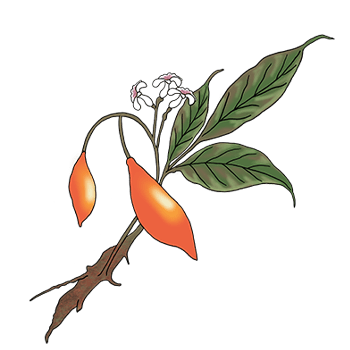
Tabernanthe iboga is a shrub of the Apocynaceae family native to Central Africa, whose root bark is traditionally used in initiatory rituals as a sacrament. The root bark contains the principal alkaloid ibogaine and 11 other iboga alkaloids. Ibogaine is the most researched of the known iboga alkaloids. It is estimated that the plant’s other alkaloids could also have therapeutic properties. There are several recognized species of plants that contain the alkaloid ibogaine, but Tabernanthe iboga is the most commonly used among the different mentioned shrubs.
Iboga has been shown to be effective in reducing severity of substance use disorders, eliminating the withdrawal syndrome associated with opioid use, and in reducing the compulsive desire (craving) to consume a wide variety of drugs. The iboga experience can facilitate a deep review of one’s personal history and current situation as well as modification of behavior and perceived role in family and society. From Iceers.com
Ibogaine induces an introspective experience that is often referred to as deeply psychotherapeutic.
It is referred to as an “oneirophrenic” as it can induce a waking dream state, although this is not always the case. An experience with ibogaine is not considered hallucinogenic because the individual is usually aware of where he or she is. They are typically aware that the experience is caused by the ingestion of ibogaine and that the visions during the experience are internal projections, although there are exceptions to this. From Iceers.com
An increasing number of studies, case studies, and testimonies of substance-dependent people who have undergone this treatment support the findings regarding its potential as a tool for the treatment of substance use disorders.
Iboga seems to be especially useful for opioid dependence, and to a lesser extent (and with greater risks) in the treatment of cocaine and amphetamines dependence. Iboga has a multi-target profile and it has been named as an “atypical psychedelic,” due to its complex interactions with different neurotransmitter systems. Ibogaine regulates the dopaminergic and serotonergic systems.
Since the discovery of the anti-addictive properties of ibogaine in 1963, the global acceptance of its therapeutic application and its development as a medicine has been very slow.
Ibogaine is not under control in the 1971 UN Convention on psychotropic drugs. Thus, in most countries, iboga and ibogaine are not scheduled substances. Ibogaine is currently illegal in 10 countries, including the United States. There are three countries where it is regulated; and three more countries where it is legal as a prescription pharmaceutical substance, “compassionate use,” or extended access. From Iceers.com
We’re Working to Decriminalize Nature!
Around the country, our movement is organizing to create legislation that decriminalizes iboga and other plants and fungi, promoting the grow – gather – gift model for sharing nature’s bounties.